Web Video Cast | Browser to TV
- 4.6
- Rating
- 50.00M
- Installs
- Free
- Price

 Analysis by App-foxy
I’ve used Web Video Cast | Browser to TV as the kind of app I open when a video is available on a website but I would rather watch it on a proper television. Its job is straightforward: browse for online video on a phone or tablet, then send compatible content to a larger screen or streaming device. In practice, that makes it more flexible than a single-service casting button, although it also means you sometimes have to understand how a particular website delivers its video.
Developed by InstantBits Inc, this free app sits in the video players and editors category. It has a 4.6 average from around 2.3 million ratings, more than 50 million installs, and an Everyone age rating. Those figures suggest that it has become a familiar tool for people who want a bridge between mobile browsing and living-room viewing, rather than a replacement for every dedicated streaming app.
How the everyday casting workflow feels
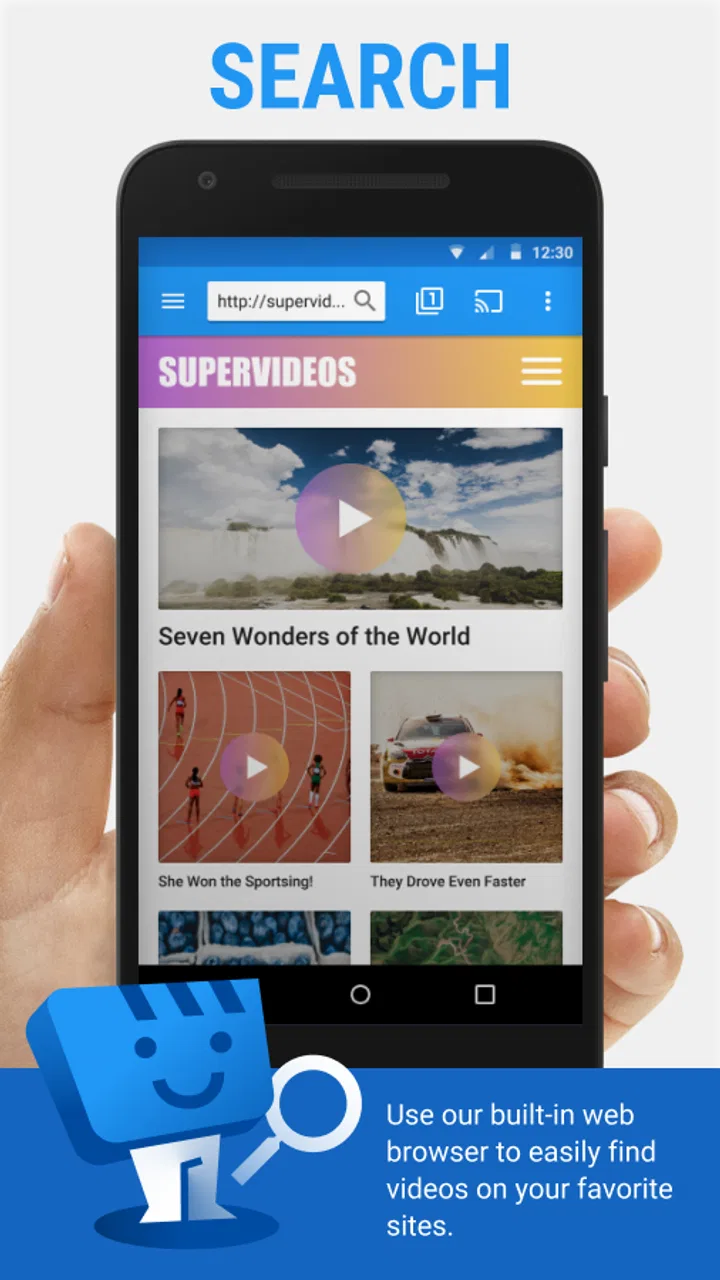
The basic routine is easy to understand. I open the built-in browser, find a page containing a movie, television episode, live stream, or other playable video, and let the app identify the media. I then choose the receiving device, such as Chromecast, Roku, DLNA equipment, or Fire TV, when it is available on the same network. Once playback begins, the phone becomes more of a remote than a second screen.
You May Also Like

 Blood Strike: 2.5 Anniversary
Blood Strike’s Loadouts Turn Every Drop Into a Tactical Gamble
A close look at Blood Strike’s custom loadouts: how fast access to signature weapons reshapes its battle royale rhythm, rewards preparation, and narrows the gap between fights.

 Pandora - Music & Podcasts
Pandora’s Music Is Easy to Start, but Harder to Recover
Pandora’s strength is its low-effort path from a seed to a station. Its weak spot is how much confidence it asks you to place in connection, setup, and quiet recovery.

 8 Ball Pool
 Is Built on Rivalries, Rematches, and Routine
A close look at the rivalries, rematches, shared routines, and unanswered safety questions that turn a quick pool match into a persistent mobile community.

 Samsung Music
’s Quiet Strength Is Playing What You Already Own
Its reach comes less from spectacle than from dependable access to a personal library. That simplicity is both the app’s strongest retention engine and its ceiling.

 AccuWeather: Weather Radar
AccuWeather Review: A Quick, Clear Forecast for Everyday Decisions
For everyday plans, the best forecast is the one you can understand quickly. AccuWeather makes rain timing, radar, and local conditions easy to act on, with a few trade-offs.

 Hill Climb Racing
Why Hill Climb Racing Still Turns Crashes Into One More Run
A tiny car, a bumpy hill and one more upgrade: Hill Climb Racing keeps resurfacing because its simple chaos makes every near-miss feel personal.
More From Our News Desk



That distinction matters. A normal screen-mirroring tool sends everything visible on the phone, including notifications, browser controls, and interruptions. Web Video Cast is more useful when I want the television to receive the video stream itself. The phone can stay available for other tasks, and the larger display is not tied to the exact contents of the handset.
My preferred test is a realistic evening scenario: someone sends me a link to a long interview or a live broadcast, and I want to watch it with other people. Instead of passing the phone around, I open the link in the app, wait for the video to be detected, select the television device, and keep the playback controls nearby. This is particularly handy for web-based material that does not have a dedicated application installed on the TV.
The experience is not equally smooth on every page. Some websites expose a clean video stream that the app can recognize quickly. Others wrap playback in advertising, unusual players, login barriers, or formats that the receiving device cannot handle. When detection fails, repeatedly tapping around usually does not solve the underlying problem. I have found it more productive to look for another version of the same content, use the site’s own full-screen player, or switch to the official TV app when one exists.
That is the first important trade-off: this is a browser-to-screen tool, not a universal compatibility guarantee. It gives me more reach than a collection of service-specific apps, but it also places more responsibility on me to choose a workable source.
Which devices fit the workflow
The app is designed for a broad range of receivers, including Chromecast, Roku, DLNA-compatible devices, and Fire TV. This is one of its strongest practical advantages. I do not need to assume that every television in the house uses the same brand or platform before trying to cast a web video.
Still, “supported receiver” does not mean identical behavior. A Chromecast-style setup may feel immediate, while a DLNA television can expose more variation in how it handles subtitles, seeking, or stream formats. Fire TV and Roku also have their own playback expectations. If a video starts but seeking is unreliable, the issue may be the receiving device’s handling of that stream rather than the browser interface itself.
Before blaming the app, I check the simple things: both devices are connected to the same local network, the television is awake, and the receiver is visible to other casting tools. A crowded or unstable wireless network can make discovery and playback look like an app failure. I also avoid judging the experience from one troublesome website; testing a straightforward public video gives a better baseline.
Settings I would check before regular use
The most valuable preparation is not changing every option. It is learning which choices affect the way a specific household watches. I look through the playback and casting settings so I know where to adjust the receiver, subtitle behavior, browser preferences, and any options related to media handling. The exact best setup depends on whether I mostly watch short clips, long-form video, or live streams.
Subtitles deserve special attention. When captions are important, I check whether they are part of the stream or handled separately by the webpage. A subtitle track that works inside the mobile browser may not transfer in the same way to a television. For a planned movie night, I test the chosen source briefly before settling in, because discovering that captions are missing after half an hour is an avoidable annoyance.
Seeking is another setting-adjacent habit worth testing. Some streams allow jumping backward and forward cleanly; others are effectively continuous broadcasts. If I am watching a long recording, I try a small seek while the video is still near the beginning. That tells me whether the source and receiver cooperate before I rely on the app for a specific scene or chapter.
I also pay attention to the browser side of the experience. Keeping a small set of frequently used pages easy to reach saves more time than constantly changing playback options. The app is most comfortable when I treat it as a focused casting browser rather than a general replacement for every browser on my phone.
Because the app is free but includes in-app purchases ranging from $1.49 to $7.49 per item, I would start with the free experience and only consider an optional purchase after identifying a real limitation in my own routine. I would not pay simply because I cast occasionally. Someone who uses it several times a week may value extra convenience more than a person who only sends a link to the TV once a month.
Small habits that make casting faster
Experienced use is mostly about reducing decisions. I keep the receiving device ready before searching for a video, rather than waiting until the page has loaded and then troubleshooting the network. I also begin with the source page instead of opening several tabs and hoping the app finds the correct player. Fewer open pages make it easier to tell which detected video belongs to the content I actually want.
When a page contains several media elements, I compare the detected choices instead of selecting the first one automatically. A page may include a preview, an advertisement, and the main video. Choosing the wrong item can create the impression that casting is broken when the real problem is simply selection.
For repeat viewing, I use a consistent sequence: open the app, go to the familiar site, start the video on the phone, verify the title or image, cast it, and only then put the phone aside. That short verification step is surprisingly useful. It prevents sending an advert, a muted preview, or an unrelated embedded player to the television.
Live streams benefit from a different habit. I connect a little before the event starts and confirm that the stream is actually playing on the receiver. Live content can be more sensitive to changing stream addresses and delays than an ordinary recorded clip. If the broadcast is important, I keep the official service or another known source available as a fallback rather than assuming a browser cast will be flawless.
Another practical pattern is using the app for discovery but a dedicated service for dependable playback. If I find a trailer or a program page through the browser, I may use that information to locate the same title in an official TV application. Web Video Cast is excellent when the web source is the easiest route; a dedicated app is often better when I need reliable resumes, profiles, recommendations, or a stable subtitle system.
Where the app reaches its limits
The biggest limitation is that it cannot make every website castable. A page may protect its video, require an interactive login, change its player structure, or use a format that the receiver does not understand. In those cases, the app can still be useful for browsing, but the final viewing experience depends on the website and the TV device.
Digital rights restrictions can also shape the result. Some services intentionally limit playback outside their official applications. If a protected video refuses to play on the television, trying different buttons is unlikely to turn it into a supported stream. The sensible choice is usually the service’s own app or a supported casting method.
Quality is another area where expectations should stay realistic. Sending a video to a television does not automatically improve its original resolution, frame rate, audio, or stability. A low-quality web source remains low quality on a large screen, where flaws can be more noticeable. Likewise, a weak wireless connection may produce buffering even when the phone itself appears to load the page normally.
Control can feel less polished than in a dedicated streaming application. The phone is still important for selecting content and managing playback, and the available controls can vary with the stream. If I want a carefully organized library, automatic episode tracking, multiple user profiles, or consistently predictable resume behavior, I would choose the official platform application instead.
Privacy and comfort also influence whether I recommend it. Browsing through a casting-focused app is convenient, but I would be careful with unfamiliar websites and avoid treating every online video page as trustworthy. For children, the Everyone rating makes the app broadly accessible, but that does not make every website reached through its browser appropriate for them. Adult supervision and sensible source selection still matter.
Who should use it, and who should skip it
I recommend it to people who regularly watch web video on a television, especially when their material comes from several unrelated sites. It is a strong fit for households with mixed receivers, because support for Chromecast, Roku, DLNA, Fire TV, and more is more useful than being locked to one ecosystem. It also suits anyone who dislikes screen mirroring and wants the phone free while a video plays.
It is less suitable for someone who watches almost everything through one major subscription service. In that case, the official TV application will generally provide a cleaner catalog, better account integration, and fewer compatibility questions. I would also steer away from this app if the main goal is mirroring games, presentations, or the entire phone interface. Its strength is sending web media, not replacing a full display-mirroring solution.
People who depend on flawless live sports, protected premium video, or advanced subtitle controls should test their exact sources before committing to it. The app may work well for one broadcaster and poorly for another. That variability is not a reason to dismiss it, but it is a reason to judge it by the websites and devices that matter in your home.
My verdict after building a repeatable routine
Web Video Cast | Browser to TV succeeds because it solves a common gap: the video exists on the web, while the comfortable screen is elsewhere. Its browser-based approach is more adaptable than relying only on dedicated streaming apps, and its broad receiver support makes it practical in mixed-device homes. I especially like the separation between browsing on the phone and watching on the television.
The best results come from using it deliberately. Check the network, test the source, choose the correct detected media, and verify subtitles or seeking before starting a long session. Those habits turn an occasionally unpredictable web-casting experience into a dependable routine. They also make it easier to recognize when the problem belongs to the website or receiver rather than the app.
The current version is 5.12.8 and it works on Android 5.0 and later, which keeps it accessible to a wide range of devices. Since it is free to install, I see little downside in testing it with the exact websites and television hardware I already use. My final recommendation is simple: choose it when flexibility matters more than a perfectly controlled catalog. If your viewing is mostly web-based and your household uses more than one kind of streaming device, it is a genuinely useful tool. If you want the polished certainty of a dedicated service, use the official app instead and keep this one as a practical backup.
FAQs for Web Video Cast | Browser to TV
01What is Web Video Cast and how does it work?
Web Video Cast is an app that allows you to stream videos from your smartphone's web browser directly to your TV. By connecting your device to a compatible streaming device or smart TV, you can browse the web and cast videos seamlessly, turning your TV into a multimedia hub.
02Is Web Video Cast compatible with all TVs and streaming devices?
Web Video Cast supports a wide range of TVs and streaming devices, including Chromecast, Roku, Amazon Fire TV, and various smart TVs with DLNA support. However, compatibility can vary, so it's essential to check if your device is supported before downloading the app for the best experience.
03Does using Web Video Cast require any additional hardware or subscriptions?
No additional hardware is needed beyond a compatible streaming device or smart TV. Web Video Cast does not require any subscriptions to function, although some features might be limited in the free version. Upgrading to the premium version can unlock additional features and remove ads.
04How user-friendly is the Web Video Cast interface?
Web Video Cast offers a straightforward and intuitive interface, making it easy for users to navigate. The app features a built-in browser that allows you to search for content and cast it directly to your TV with just a few taps, making the streaming process smooth and efficient.
05Are there any privacy concerns when using Web Video Cast?
Web Video Cast is designed with user privacy in mind. The app does not collect browsing history or personal information beyond what is required for streaming functionality. Users should always ensure they are using official versions of the app to maintain their privacy and security.
Pros
- Supports multiple streaming devices.
- User-friendly interface and navigation.
- Streams videos from various websites.
- Allows video downloads for offline use.
- Offers subtitle support for videos.
Cons
- Ads can be intrusive at times.
- In-app purchases for full features.
- Occasional streaming lag issues.
- Compatibility varies with devices.
- Limited support for 4K streaming.

Web Video Cast | Browser to TV
Gallery